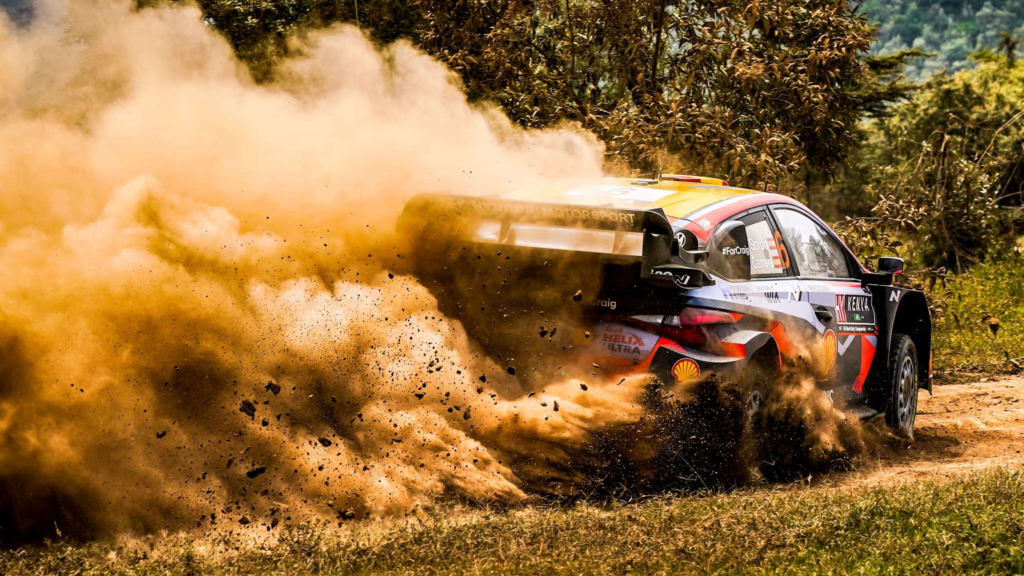
WRC Safari Rally Kenya starts today. Here is everything you need to follow the third round of the 2026 FIA World Rally Championship
WRC Safari Kenya 2026: full schedule, key stages, entry list highlights and the main talking points heading into one of the toughest events of the season.
Safari Rally Kenya is underway today, Thursday 12 March, and runs until Sunday 15 March. The 2026 edition is based around Naivasha and the Great Rift Valley, keeping the rally compact in geography but still absolutely demanding in technical terms. This remains the most punishing gravel event on the WRC calendar, with rough surfaces, deep ruts, fesh fesh, exposed rock and weather conditions that can shift the grip level from one car to the next in a matter of minutes.
This is never just a speed rally. Kenya is about managing load through the chassis, protecting the car over repeated impacts, reading the terrain early and keeping the rhythm when the road starts breaking away under the tyres. Mechanical sympathy, precision and clean execution are always decisive here.
The 2026 route features 20 special stages and, after the latest revision, 338.34 competitive kilometres. The service park is based in Naivasha and the rally stays concentrated in the core Safari territory, which means the event keeps its identity intact: fast gravel, rough sections, technical changes of surface and continuous risk management from the first stage to the Power Stage.
Event Overview
| Event Name | Rally Kenya 2026 |
| Championship: | World Rally Championship 2026 – Round 3 |
| Location | Naivasha, Kenya |
| Dates | 12–15 March 2026 |
| Surface | Gravel |
| Stages | 20 special stages (338,34 km competitive distance) |
| Total length | 1.205,46 km (including road sections) |
| Official Website: | Visit the event page |
WRC Social Media, Live Streaming & Highlights
| Instagram: @fiawrc | Live Streaming: Rally.Tv | YouTube: FIA WRC Channel | Facebook: FIA WRC Page |
WRC Kenya 2026 Schedule & Itinerary
Thursday 12 March: Shakedown and opening loop
The rally begins with Shakedown at WRTI Nawisa, 6.31 km, before the first two competitive stages later in the day. Thursday is short in terms of mileage, but it already sets the tone for the weekend. Camp Moran is enough to put the suspension, the notes and the driver’s commitment under pressure immediately, while Mzabibu closes the day with a different rhythm and no real margin for error if the surface starts changing.
On Safari roads, the opening kilometres matter. The crews need to find confidence without exposing the car too early, because Kenya can punish a small mistake harder than almost any other event in the championship.
Friday 13 March: The first real Safari stress test
Friday is the first full survival day and the first major filter of the rally. The route includes Camp Moran 2, Loldia 1, Kengen Geothermal 1, Kedong 1, then Kedong 2, Kengen Geothermal 2, Loldia 2 and Mzabibu 2. It is the heaviest day in terms of competitive demand and the point where the rally begins to sort pure pace from real Safari management.
Camp Moran is rough and aggressive. Kengen Geothermal brings a faster flow but still places heavy vertical load into the car over crests and compressions. Kedong mixes speed with punishment, and Loldia remains a stage where suspension control, commitment and discipline all have to work together.
This is the day when drivers need to be efficient on line choice, calm over broken ground and sharp in reading grip evolution. Lose the platform of the car and the time starts leaking away immediately. Push at the wrong moment and the risk of damage rises fast.
Saturday 14 March High speed commitment through Soysambu, Elmenteita and Sleeping Warrior
Saturday delivers another major technical challenge with six stages: Soysambu 1 and 2, Elmenteita 1 and 2, and Sleeping Warrior 1 and 2. The profile of the day changes, but the demand does not drop. This is where a driver needs to combine high speed gravel commitment with precise car placement.
Soysambu alternates open sections and more technical rhythm changes. Elmenteita adds variation in road profile and direction changes that punish any hesitation. Sleeping Warrior remains one of the signature tests of the modern Safari and one of the clearest examples of what strong gravel technique really looks like at WRC level.
To be quick here, the driver has to keep the car settled, preserve momentum and avoid unnecessary hits. It is a stage that rewards a clean, disciplined approach rather than overdriving. When the road is moving under the car, the best crews are the ones who can stay efficient without disturbing the balance.
Sunday 15 March: Oserengoni, Hell’s Gate and the Power Stage finish
Sunday closes the rally with Oserengoni 1, Hell’s Gate 1, Oserengoni 2 and Hell’s Gate 2, which serves as the Wolf Power Stage. It is a shorter day on paper, but still one that can move points, podium places and manufacturer results.
Oserengoni opens with a narrower, more technical section before releasing the cars into faster terrain. Hell’s Gate is one of the best known stages of the event and one of the most spectacular, but it is also a stage where the commitment level has to stay high right to the end. There is no room to relax on Sunday morning in Kenya. A rally like this is only finished once the car reaches the final control.
Entry list highlights
Safari Rally Kenya 2026 has a strong field across the headline categories, with major manufacturer interest and a deep supporting entry. In Rally1, Toyota arrives with Oliver Solberg, Elfyn Evans, Sébastien Ogier, Takamoto Katsuta and Sami Pajari. Hyundai fields Adrien Fourmaux, Thierry Neuville and Esapekka Lappi. M Sport Ford brings Joshua McErlean and Jon Armstrong.
That top category line up already gives the event a strong competitive shape, but Safari is never only about the factory battle. The WRC2 field adds depth, and the local and regional crews bring a level of knowledge that always matters in Kenya. Experience of the terrain, weather patterns and road evolution can become a real performance factor once the stages start breaking up.
One technical factor to watch this weekend
Tyre behaviour could play a major role in this year’s event. Kenya always asks for a compromise between durability, compliance and impact resistance. The roughest sections punish the tyre carcass, while the variable grip and possible wet sections can completely change the balance requirement from one loop to the next.
That means car set up, tyre management and driver feel will be tightly linked all weekend. This is one of those rallies where the stopwatch reflects much more than bravery. It reflects how well the whole package is working underneath the crew.
Why Safari changes the normal rally logic
Most WRC rounds are won by combining pace, commitment and precision. Kenya adds another layer. Here, the driver has to be fast while constantly protecting the machinery. The co driver has to stay ahead of the terrain and the rhythm. The engineers have to deliver a car that can absorb impacts without losing consistency. The team has to manage the whole event with a wider safety margin while still staying competitive.
That is what makes the Safari such a reference point. It exposes any weakness in driving technique, car preparation and rally management. And when the conditions get rough, the crews who stay smooth, balanced and intelligent usually come to the front.
Full stage schedule
Thursday 12 March
Shakedown WRTI Nawisa, 6.31 km
SS1 Camp Moran 1, 24.35 km
SS2 Mzabibu 1, 8.86 km
Friday 13 March
SS3 Camp Moran 2, 24.35 km
SS4 Loldia 1, 18.95 km
SS5 Kengen Geothermal 1, 13.16 km
SS6 Kedong 1, 13.79 km
SS7 Kedong 2, 13.79 km
SS8 Kengen Geothermal 2, 13.16 km
SS9 Loldia 2, 18.95 km
SS10 Mzabibu 2, 8.86 km
Saturday 14 March
SS11 Soysambu 1, 24.94 km
SS12 Elmenteita 1, 18.01 km
SS13 Sleeping Warrior 1, 18.41 km
SS14 Soysambu 2, 24.94 km
SS15 Elmenteita 2, 18.01 km
SS16 Sleeping Warrior 2, 18.41 km
Sunday 15 March
SS17 Oserengoni 1, 18.22 km
SS18 Hell’s Gate 1, 10.48 km
SS19 Oserengoni 2, 18.22 km
SS20 Hell’s Gate 2, 10.48 km, Wolf Power Stage