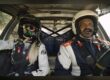
Inside the European XC Cross Car Championship with a World Rally Champion Thierry Neuville
The video featured in this article follows Thierry Neuville during a full race weekend in the European XC Cross Car Championship, competing in extreme conditions aboard the Lifelive Motorsport XC TN11. Beyond the intensity of the racing, the footage offers valuable insight into why Cross Car has become an increasingly relevant discipline even for drivers competing at the very top level of world rallying.
Cross Car is no longer perceived solely as an entry-level category. Its technical characteristics, combined with modern data acquisition, make it a powerful platform for refining driving technique, understanding vehicle dynamics on loose surfaces and maintaining peak performance in rally.
Why Cross Car Is Technically Relevant to Rally Drivers
FIA Cross Car was created as a cost-controlled off-road category, but its real strength lies in how directly it exposes driving fundamentals. Lightweight construction, short wheelbase and high responsiveness mean that grip variations, balance errors and incorrect inputs are immediately evident. For rally drivers, this environment closely replicates the most critical phases of gravel stages, where precision and sensitivity define performance.
This direct feedback loop explains why Cross Car is increasingly used not only by young drivers, but also by established professionals. Training in such a demanding environment sharpens car control, improves adaptability and reinforces correct technique under constantly changing grip conditions.
Cross Car as a Performance Tool for World Rally Champions
The presence of a World Rally Champion in the European XC Cross Car Championship is not a coincidence. Cross Car provides a compact, intense driving experience that strips performance back to its core elements. Without aerodynamic load or electronic complexity, the driver is forced to manage traction, braking and balance entirely through mechanical grip and technique.
For experienced rally drivers, this type of training is particularly valuable. It maintains sensitivity, reinforces correct habits and allows high-intensity driving with relatively low operational complexity compared to full rally programs.
Data Acquisition Applied to Cross Car
A key evolution in modern Cross Car programs is the adoption of data acquisition, bringing professional motorsport analysis into a compact off-road platform. Through GPS-based telemetry, engine data and acceleration measurements, every run becomes a source of objective information.
When telemetry is synchronized with onboard video, drivers and engineers can accurately evaluate driving lines, braking points, throttle application and consistency. This approach transforms Cross Car from a purely instinctive discipline into a measurable and repeatable training tool, fully aligned with contemporary rally methodologies.
How Data-Driven Cross Car Training Transfers to Rally
The integration of data acquisition into Cross Car training has a direct impact on rally performance. Drivers develop a clearer understanding of cause-and-effect between inputs and vehicle response, accelerating the learning process and improving consistency. The analytical mindset developed in Cross Car transfers seamlessly to Rally4, Rally3 and Rally2 cars, where data interpretation is already a fundamental part of performance engineering.
In this sense, Cross Car acts as both a driving and educational platform, preparing drivers not only physically, but also technically and mentally for modern rally competition.
From Cross Car to Rally: A Modern Development Path
The video featuring Thierry Neuville competing in Cross Car conditions underlines a clear reality: performance at the highest level of rallying is built on strong fundamentals, continuous refinement and data-driven analysis. FIA Cross Caroffers all three in a pure and demanding format.
As rally continues to evolve, Cross Car stands out as one of the most effective disciplines for developing and maintaining elite-level performance, bridging the gap between raw driving skill and modern, data-supported motorsport.